
The compressor runs, but pressure takes longer to build. The discharge air feels hotter. Oil use has increased. None of these symptoms tells you to replace the compressor element immediately.
Start with the operating record.
Write down loaded and unloaded pressure, temperature warnings, running hours, oil use, noise, vibration and the exact point when performance changed. If the fault started after service or electrical work, include that too.
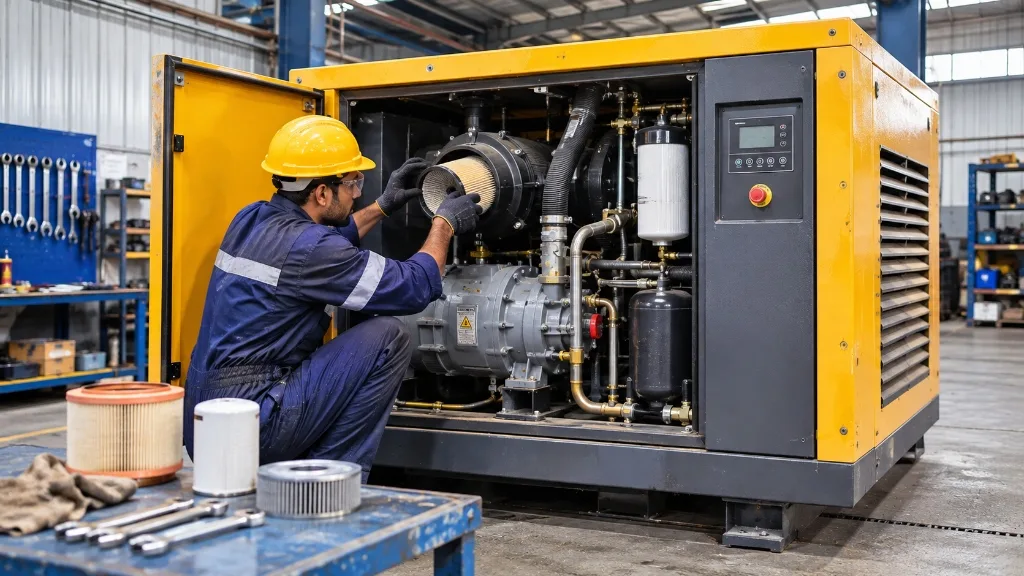
Know which compressor you are sending
A small piston compressor, rotary-screw unit and diesel site compressor do not share the same controls or repair process. The workshop needs the model, serial number, power rating, operating pressure and service history.
Also send details of the air system. A pressure drop may be in the compressor, but it may also be a leak, blocked filter, undersized pipe or demand higher than the machine can supply.
Atlas Copco’s troubleshooting guidance lists air leakage, clogged intake filters, separator restriction, inlet-valve faults and air demand above delivery among causes of low output. That is why diagnosis should cover the installation as well as the compressor cabinet.
Make it safe before inspection
Compressed air stores energy. The machine must be switched off, isolated and fully depressurised before maintenance. Hot oil, piping and compressor elements can burn skin after shutdown.
Atlas Copco advises isolation and depressurisation of all parts rather than relying on check valves. The machine manual remains the correct source for the model-specific procedure.
What should the workshop inspect?
The work should follow the complaint. Common areas include:
- Intake filter and inlet valve
- Belts, coupling and drive condition
- Oil level, oil condition and leakage
- Oil filter and separator where fitted
- Cooler cleanliness and ventilation
- Motor, starter and electrical protection
- Solenoid valves and control-air tubing
- Condensate drains
- Safety and minimum-pressure valves
- Compressor element condition
Do not let a safety valve be adjusted simply because it lifts. The reason for excess pressure must be found, and settings must follow the manufacturer’s information.
Repair or replace?
A blocked filter, worn belt, leaking pipe or failed control valve may be a direct repair. A damaged rotary element, badly worn piston assembly, failed motor or corroded receiver can change the decision.
It depends on machine age, hours, service history, part availability, energy use and whether the receiver and major structure remain safe. Ask the workshop to separate necessary repair from recommended maintenance.
Testing should use more than the pressure gauge
After repair, the compressor should be checked through start, load, unload and shutdown. Record how pressure builds, whether the unit holds pressure, temperatures, leakage, controller alarms and unusual noise. Confirm that drains and safety functions operate according to the model procedure.
A five-minute idle run may miss the fault that appears after the oil reaches operating temperature.
Ask for a service report listing parts, oil, filters, measurements and outstanding work. Keep it with the hour record.
Complete Air Compressor Workshop & Repair Services
- Low-pressure and low-output diagnosis
- Compressor-element and inlet-system inspection
- Oil, filter and separator service requirements
- Cooler, fan and overheating checks
- Leakage, valve and control-system diagnosis
- Electrical panel and controller fault assessment
- Loaded testing and service-report requirements
Why Choose Mech On Site for Air Compressor Requirements?
Compressor faults often appear only after the machine warms up or operates under load. Mech On Site allows customers to share the nameplate, alarms, pressure readings and operating symptoms before repair or rental support is considered.
The final repair method, safety checks, parts, testing and warranty depend on the compressor design and provider capability.
Frequently Asked Questions
1. Why is my compressor running but not building enough pressure?
Possible causes include air leakage, inlet restriction, separator blockage, valve faults, worn compressor components or demand above the machine’s output. A loaded test helps separate machine loss from site demand.
2. What details are needed for a compressor repair request?
Provide the make, model, serial number, hours, controller alarms, pressure and temperature readings and a description of when the fault occurs. A safe running video with sound may also help.
3. Can an overheating compressor be tested while it is hot?
Diagnosis may require readings near the condition where the fault appears, but testing must follow the manufacturer’s safety procedure. Guards, hot surfaces and pressurised systems require controlled access.
4. When should a compressor be moved to a workshop?
Workshop movement is appropriate for compressor-element work, major electrical repair, cooler replacement or controlled dismantling. Leaks, filters, sensors and initial diagnosis may often be assessed at site.
5. Can I request a rental compressor during repair?
Yes, submit the required pressure, free-air delivery, application, location, duration and power or fuel arrangement. Rental suitability and availability should be confirmed for the actual site demand.
Mech On Site recommendation
Mech On Site recommends evaluating an air-compressor repair under the pressure and temperature conditions in which the original fault occurred. A short idle run may not reveal a problem that appears only under load or after the compressor reaches operating temperature.
For the initial assessment, please share the compressor nameplate, operating hours, controller alarms, pressure readings, oil condition and a running video with sound, where safe. Clearly identify whether the concern is low pressure, overheating, oil carryover or unexpected shutdown.
Safety-valve work, pressure-vessel concerns and warranty repairs should follow the manufacturer’s procedure and any applicable inspection requirements.
Related Mech On Site services
For compressor requirements, Mech On Site accepts enquiries for on-site diagnosis, workshop repair, inspection, spare parts and mechanic support. The compressor nameplate, operating condition and controller information should accompany the request.
Customers needing temporary air capacity may also submit an air-compressor rental requirement. Owners with an available compressor can offer it for rental consideration through the equipment-listing service.