
A small contractor may need to load loose material in the morning and dig a service trench later that day. A backhoe loader can cover both jobs when the attachment, ground conditions and required output suit the machine. That flexibility explains its place on mixed construction sites.
How a backhoe loader works: front loader and rear backhoe
The front loader bucket handles tasks such as loading soil, sand and construction material. At the rear, the backhoe uses a boom, dipper and bucket for excavation. The operator changes the working setup to suit each task; the two ends do not replace every dedicated loader or excavator application.
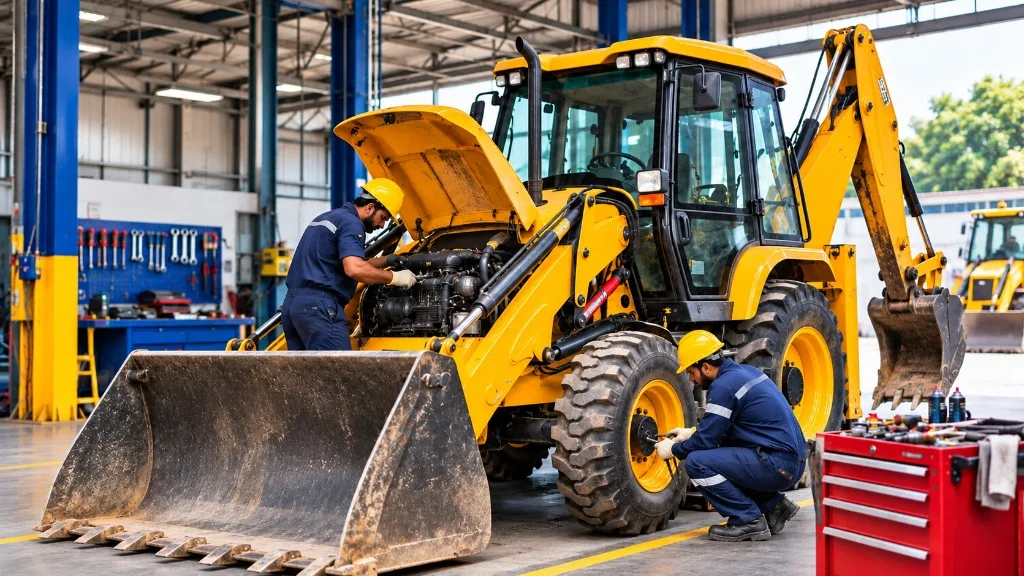
Backhoe loader uses on construction and utility jobs
Building work, road maintenance, drainage, utility trenches and land development can involve several short tasks rather than one continuous operation. A backhoe loader gives the contractor a way to handle loading and digging without mobilising a separate machine for every small job.
Choose by the work, not simply by the number of functions. Sustained excavation or high-volume loading may justify dedicated equipment. Reach, digging depth, material, access and actual output determine whether the backhoe is the practical choice.
On Indian sites, nearby work locations may favour a wheeled machine, subject to road-use requirements and safe travel conditions. Soft ground, narrow access and a muddy approach can change that decision before the bucket reaches the work.
Backhoe loader maintenance checklist
- Engine oil: use the specified grade and service interval, and investigate unexplained changes in level.
- Hydraulics: inspect accessible hoses and connections for damage or leaks using the approved safe procedure.
- Air intake: service filters as the manual requires, with attention to dusty work.
- Cooling: check coolant and radiator condition after the machine has been made safe to inspect.
- Tyres: check pressure, damage and wear against the machine requirements.
- Working equipment: inspect bucket teeth, pins, bushes and lubrication points.
The operator manual sets the intervals and inspection method. A generic checklist cannot tell you the correct oil grade, grease interval or tyre pressure for every model.
Record the symptom before calling it a pump problem
If the rear arm feels weak, describe which movement is affected, whether the oil is hot and whether the front loader has the same complaint. A leak, control issue and hydraulic component fault can produce different patterns. Record what the operator observes rather than guessing the failed part.
For engine starting problems, note cranking behaviour and any display warnings. With electrical faults, record which functions remain available. The aim is a clear service brief, not an unplanned test with people near moving equipment.
Repair at site or send it to a workshop?
The answer depends on access, contamination control, lifting requirements and the component involved. Some inspections and repairs can be arranged at the machine location. Major component work may need workshop facilities and transport planning.
Use our loader equipment guide to organise the fault description. For workshop selection and scope, read how to choose a backhoe loader workshop.
Backhoe loader questions
Is a backhoe loader the same as an excavator?
No. A backhoe loader combines a front loader with a rear excavating attachment. A dedicated excavator has a different layout and working arrangement. Compare the actual task, reach and production requirements.
Should I follow one maintenance interval for every backhoe model?
No. Use the model manual and adjust planning for the stated operating conditions. Engine servicing, air filtration and attachment lubrication may have different schedules.
What details should I send when the rear arm is weak?
Send the model, hours, affected movements, hot or cold behaviour, visible leaks and whether the front loader is also affected. Include existing alarms or service records where available.
Get support for the job you actually need
For inspection, diagnosis, parts sourcing or workshop repair, contact Mech On Site with the backhoe model, location and symptoms. If you need a mechanic or temporary rental capacity, include the task and expected duration so the requirement can be assessed.