
The boom raises from the ground controls but stops from the platform. Or the platform slowly drops when the machine is parked. A workshop needs that exact symptom before it begins.
“Boom lift not working” can describe a control fault, hydraulic leak, battery problem, damaged wiring loom, sensor input or safety interlock doing its job.
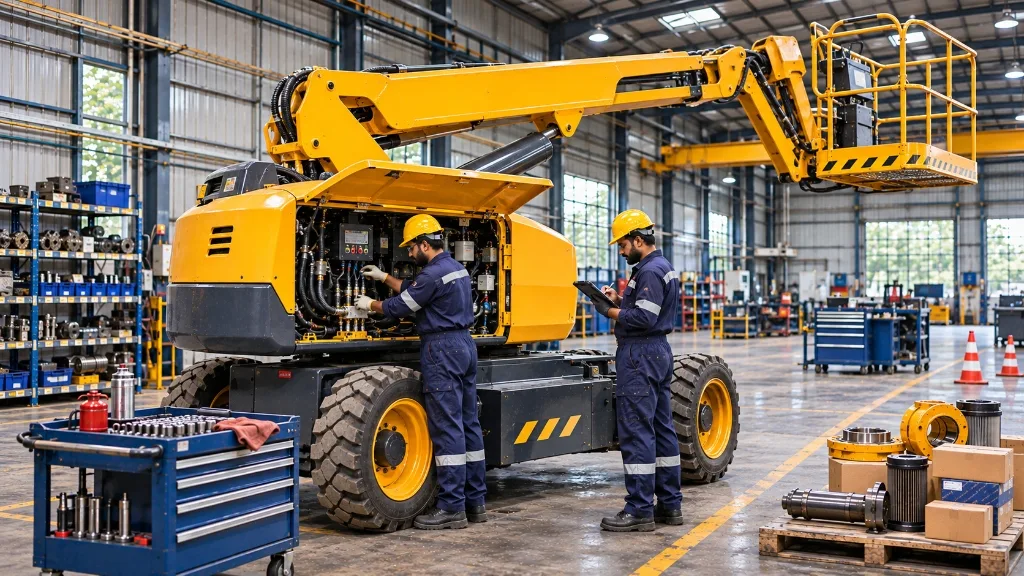
Record the fault before transport
Photograph the display and fault code. Note which control station was used, which function failed, whether the machine was level and whether the problem appeared cold, hot or after charging.
Send the model and serial number. Boom-lift controls, inspection points and maintenance schedules are model specific. The correct operation, service and safety manuals should be available to the technician.
A workshop inspection goes beyond the failed switch
JLG groups annual boom-lift inspection areas into functions and controls, platform, boom, turntable, chassis, power system, hydraulic/electrical systems, manuals/decals and general structural items. That is a useful shape for workshop intake.
The immediate fault comes first. Then check related systems and any damage that could affect safe return to work.
Look at:
- Platform gate, rails and anchorage points
- Boom sections, pins, wear pads and hose routing
- Turntable, chassis, tyres and wheel fasteners
- Cylinders, pumps, hoses and hydraulic leakage
- Wiring, connectors, batteries or engine system
- Ground and platform controls
- Emergency stop and emergency lowering
- Alarms, limit devices and capacity systems fitted to the model
- Manuals, safety decals and modification history
No safety device should be bypassed to make the machine move. A repeated interlock needs diagnosis.
Electric and engine-powered machines fail differently
On an electric boom lift, battery condition, charger performance, cable connections and motor controls can affect several functions. A voltage reading without a load test may not tell the whole story.
On an engine-powered machine, the workshop may also need to check fuel, air, cooling and engine speed under hydraulic demand. Both types still require attention to hydraulics, structure and controls.
Structural work needs the correct procedure
Cracks, distorted boom sections, damaged welds or unauthorised modifications cannot be treated as ordinary fabrication. The repair route should follow manufacturer information and qualified assessment. Ask how the workshop will inspect the area after repair.
Paint can wait. Structure cannot.
What testing should follow the repair?
Complete the model-specific function checks from both control stations. Test emergency functions and confirm that controls return and stop correctly. Watch for leakage, abnormal noise and unintended movement.
Inspection frequency depends on the manufacturer, operating hours, environment and applicable rules. JLG notes that harsh environments and multi-shift work may require more frequent attention. Do not copy an interval from a different model or jurisdiction.
Request a repair report and inspection record. It should identify the fault, parts, settings, tests and any defect left for later action.
Complete Boom Lift Workshop & Repair Services
- Hydraulic leakage and function diagnosis
- Battery, charging and electric-drive checks
- Control, sensor and interlock fault assessment
- Boom structure, pins, wear pads and cylinder inspection
- Emergency-lowering and ground-control checks
- Tyre, axle and drive-system inspection
- Repair records and coordination of required inspection
Why Choose Mech On Site for Boom Lift Repair Requirements?
Boom-lift repair must preserve the machine’s safety functions and model-specific settings. Mech On Site allows owners to submit the exact model, fault codes and operating symptoms before workshop support is assessed.
Repair does not replace a manufacturer-required or statutory inspection. Provider competence, parts, testing and return-to-service requirements must be confirmed for the machine.
Frequently Asked Questions
1. When should a boom lift be removed from service?
Remove it from service when uncontrolled movement, structural damage, failed emergency controls, unreliable interlocks or serious leakage is observed. Safety devices should not be bypassed.
2. What details should accompany a boom-lift repair request?
Provide the model, serial number, hours, fault codes, site conditions and a clear description of the failed function. Record a video only when people can remain outside the hazard area.
3. Can a workshop repair certify the boom lift as safe?
A repair report confirms the work completed, but it does not automatically replace any inspection required by the manufacturer or applicable rules. That inspection must follow the correct competent-person route.
4. Can an electric boom lift with battery problems be repaired on site?
Initial checks of charging, connectors, battery condition, controls and fault codes may be possible at site. Battery replacement, drive-system work or controlled testing may need workshop facilities.
5. Can I request a rental replacement during workshop repair?
Yes, submit the required work height, outreach, access, location and dates. The replacement must be checked against the work task and site conditions.
Mech On Site recommendation
Mech On Site recommends removing a boom lift from service whenever a structural defect, uncontrolled movement, failed emergency function or unreliable safety interlock is suspected. Safety devices should never be bypassed to continue the shift.
Please share the machine model, serial number, operating hours, fault codes and site conditions with the service request. A video may assist the assessment when it can be recorded without placing anyone near a hazardous movement.
The workshop report should identify the repair procedure, parts used and functional tests completed. A repair invoice does not replace a manufacturer-required or statutory inspection, and warranty work should continue through the authorised service route.
Related Mech On Site services
Boom-lift owners can submit requirements through Mech On Site for fault diagnosis, workshop repair, equipment inspection, spare parts and qualified mechanic support. Safety-related inspection obligations remain separate from the repair itself.
If workshop time affects the project, customers may also enquire about a temporary boom lift on rent. Owners with available equipment can use the rental-listing service.