
A concrete pump may lose output because of worn concrete-side parts, a hydraulic problem, poor material flow or a control fault. Replacing the first worn item found can be expensive if the real cause remains in the machine.
Start by recording the exact pump model, hours, concrete output, recent maintenance and the complaint. Note whether the problem occurs from cold, after heating, at high output or only with a particular mix or pipeline setup.
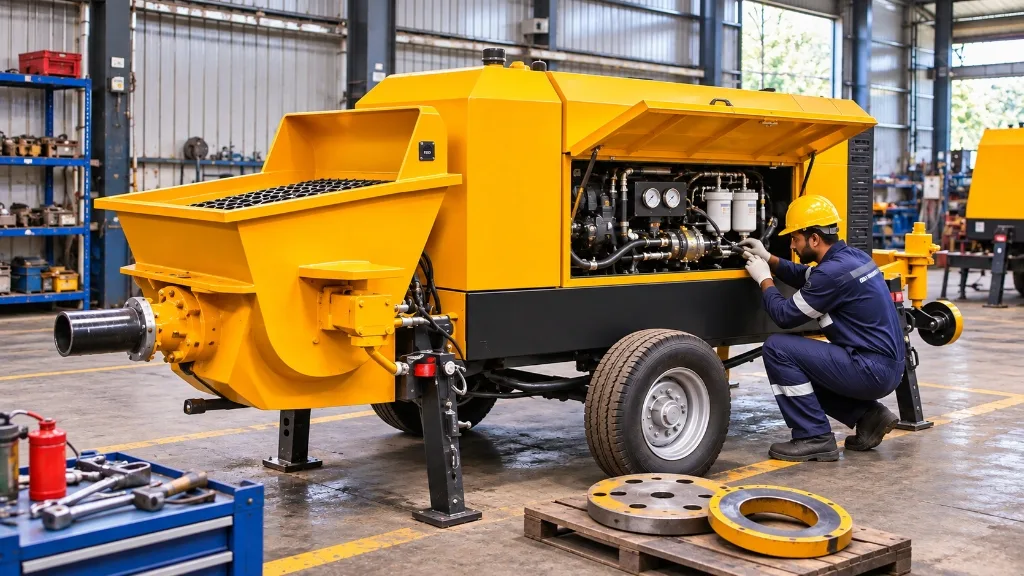
Describe the fault in working terms
Useful information for a concrete pump workshop includes:
- Pumping output has fallen
- Pressure rises but concrete does not move correctly
- The machine cycles unevenly
- Hydraulic oil overheats
- The hopper or agitator behaves abnormally
- Concrete leaks around the wear parts
- A remote or control-panel function is intermittent
A short video, alarm display and hydraulic temperature reading can save time during diagnosis.
Inspect the concrete-side wear parts
The wear plate, wear ring, cutting ring, S-valve or transfer tube, seals and delivery-cylinder condition should be inspected using the model procedure. Excess clearance and uneven wear can reduce pumping efficiency and allow material to bypass.
The hopper, grate, agitator and lubrication points also need inspection. Hardened concrete, damaged agitator parts or poor lubrication can create additional load and unsafe working conditions.
Putzmeister documentation for stationary pumps identifies the hopper, S-transfer tube and delivery-cylinder arrangement as key parts of the pumping system. The exact design and service limits vary by model.
Diagnose the hydraulic system under realistic load
Check oil level and condition, filters, cooler airflow, pumps, valves, cylinders, hoses and connections. Oil that is contaminated or repeatedly overheated can damage several components.
Pressure testing must follow the correct diagram and machine procedure. A low reading can come from the pump, relief setting, leakage or control signal. A high reading does not automatically prove that the system is healthy.
Where the complaint appears only after the machine warms up, repeat the test at operating temperature. Cold-oil testing alone may miss internal leakage.
Check controls and safety functions
Inspect the control panel, emergency stops, remote control, sensors, wiring and connectors. Any bypassed or damaged safety device must be corrected before delivery.
For boom pumps, the boom structure, pins, cylinders, outriggers, interlocks and relevant inspection requirements also need a qualified inspection. A pumping repair should not be treated as proof that the boom is safe.
Pipeline condition affects both output and safety
Delivery pipes, elbows, clamps, seals and hoses wear from abrasive concrete. Inspect them using the approved method and replace parts that do not meet the applicable limit. Never release a clamp or open a pressurised line.
The repair scope should state whether the pipeline and end hose are included. A good workshop report separates machine findings from pipeline findings so the owner knows what was actually checked.
Cleaning and final testing matter
Concrete residue should be removed using the safe procedure for the equipment. Guards and covers must be restored after service.
Final testing should confirm smooth cycling, oil temperature, leakage, controls, emergency stops and pumping performance under an appropriate test condition. Record replaced parts, settings, readings and remaining advisories.
Complete Concrete Pump Workshop & Repair Services
- Pumping-unit and cycle-performance diagnosis
- Wear plate, wear ring and transfer-tube inspection
- Delivery-cylinder, seal and lubrication-system work
- Hydraulic pump, valve, cooler and cylinder checks
- Hopper, agitator and control-system repair
- Pipeline, clamp, elbow and end-hose inspection requirements
- Boom-system repair coordination where applicable
Why Choose Mech On Site for Concrete Pump Requirements?
Concrete-pump performance depends on the pumping unit, hydraulics, controls, concrete condition and delivery line. Mech On Site allows customers to submit these operating details before repair, parts, mechanic or rental requirements are assessed.
Pumping-unit repair, pipeline inspection and boom inspection should be scoped separately where each applies.
Frequently Asked Questions
1. Why has my concrete pump output dropped?
Possible causes include worn concrete-side parts, internal hydraulic leakage, control faults, poor material flow or delivery-line restriction. The condition in which output falls helps narrow the check.
2. What details should I share before workshop repair?
Provide the pump model, serial number, hours, alarm codes, hydraulic temperature, concrete mix details, pipeline arrangement and a safe video of the cycle where possible.
3. Can a worn S-valve or wear plate be checked without dismantling?
Some leakage and clearance signs can be observed during inspection, but model-specific measurement may require cleaning and controlled access. Pressure must be released before any delivery-system work.
4. Does repairing the pumping unit cover the boom inspection?
No. Boom structure, pins, cylinders, outriggers and safety functions have their own inspection requirements. They should be included explicitly when relevant.
5. Can I request a concrete pump on rent during repair?
A rental requirement may include the pump type, output, vertical and horizontal distance, pipeline needs, site access, location and dates. Availability and commercial terms require supplier confirmation.
Mech On Site recommendation
Mech On Site recommends recording the conditions under which a concrete-pump fault appears before dismantling begins. Changes in hydraulic-oil temperature, output setting, concrete mix and pipeline arrangement can help separate concrete-side wear from a hydraulic or control problem.
Please provide the pump model, serial number, operating hours, alarm codes, hydraulic temperature and relevant details from the last job. A video may assist the assessment when it can be captured safely.
The workshop report should distinguish concrete-side wear, hydraulic findings, control faults and pipeline condition. Where applicable, boom inspection and certification should be treated separately from repair of the pumping unit.
Related Mech On Site services
Concrete-pump owners can submit requirements through Mech On Site for fault diagnosis, workshop repair, inspection, wear parts, hydraulic components and mechanic support. Pumping-unit repair and boom inspection should be scoped separately where both are required.
Projects needing temporary pumping capacity may also submit a concrete-pump rental requirement. Owners with an available pump can offer it for rental consideration through the equipment-listing service.