
A crane can return from repair with fresh paint and still carry the same risk it had before.
The workshop may have stopped the oil leak or replaced the rope. That does not prove the controls, brakes, structure and safety systems are ready for lifting. Crane repair needs a clear boundary between maintenance work, technical inspection and formal certification.
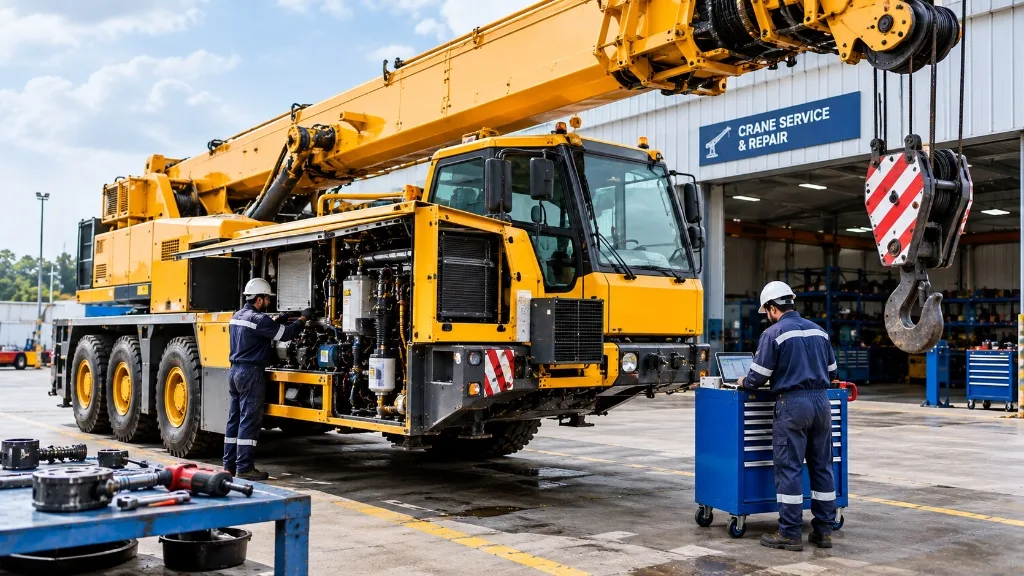
Start with the crane type and configuration
Mobile, crawler, tower, truck-mounted and pick-and-carry cranes do not share one repair checklist. Record the manufacturer, model, serial number, capacity, boom or jib configuration, hour reading and fault history.
Describe the lift condition when the fault appeared. Include load, radius, boom length, ground condition and any warning shown. Do not recreate an unsafe lift to demonstrate the problem.
The workshop should follow the fault path
A crane that will not lift may have a hydraulic, control, engine or safety-system issue. A crane that drifts may need cylinder, brake, valve or winch investigation. Unusual rope wear may point towards sheave condition or alignment instead of assuming the rope alone is at fault.
The technician should use model service information and relevant schematic diagrams. Liebherr’s crane maintenance training includes component identification, error-code interpretation, service information, general maintenance and crane inspection topics. That level of specialisation matters.
What else should be inspected?
Related checks may cover:
- Boom, jib and structural connections
- Pins, bushes, fasteners and wear areas
- Wire ropes, sheaves, drums and hooks
- Winches, brakes and slew system
- Hydraulic pumps, valves, cylinders, hoses and coolers
- Steering, travel and outriggers where fitted
- Electrical controls, sensors and wiring
- Rated-capacity and limiting systems fitted to the crane
- Emergency functions and warning devices
- Tyres, tracks or undercarriage
The scope must match the crane. A visual look cannot replace model-specific measurements or required inspection.
Structural repair is specialist work
A crack needs investigation before welding. The workshop should identify the material, approved procedure, preparation, qualified welder and post-repair inspection. Adding a plate without understanding the load path can create another stress point.
Unauthorised modifications can also affect capacity and certification. Record any extra counterweight, altered attachment, changed rope arrangement or repaired boom section.
Repair, inspection and certification are different
The workshop repairs defects. A competent inspector evaluates condition according to the relevant requirement. A load test, where required, must follow an approved method with proper controls and documentation.
Do not accept “tested by lifting something heavy in the yard” as a formal test record.
Liebherr describes crane inspections as condition checks that can include safety checks, load tests and maintenance planning. The important point is that the scope and result are documented.
What should leave with the crane?
Ask for the job card, parts list, inspection findings, settings or measurements, test results and outstanding defects. Keep the service record with the crane documents.
Before the first lift, the operator still needs the normal pre-use checks and site assessment. Workshop release does not remove responsibility for ground conditions, setup, load chart, weather and lift planning.
Complete Crane Workshop & Repair Services
- Hydraulic, control and engine fault diagnosis
- Wire-rope, sheave, hook and winch inspection
- Brake, outrigger and steering-system checks
- Boom, jib, pin and structural assessment
- Load-safety system and warning-device diagnosis
- Electrical and electronic fault assessment
- Repair documentation and inspection coordination
Why Choose Mech On Site for Crane Workshop Requirements?
A crane repair request needs the machine configuration, fault history and lifting-safety context. Mech On Site allows customers to submit these details before repair, mechanic or rental requirements are assessed.
The repair provider does not replace the competent or authorised party responsible for statutory inspection, certification and return-to-service decisions.
Frequently Asked Questions
1. What crane faults require an immediate stop?
Stop lifting when the concern affects the structure, rope, hook, brakes, outriggers, steering, controls or load-safety systems. Secure the crane according to the operating procedure before inspection.
2. What information should be included in a crane workshop enquiry?
Provide the model, serial number, boom and counterweight configuration, hours, site location, fault codes and recent service history. Photographs should be taken only from a safe position.
3. Is a load test required after every crane repair?
It depends on the component repaired, manufacturer procedure, owner requirements and applicable rules. The test type and authorised party should be agreed before work begins.
4. Can structural welding be completed by a general workshop?
Structural repairs should follow an approved repair method with suitable material, welding procedure and inspection. A general welding repair without engineering or manufacturer guidance may alter the load path.
5. Can Mech On Site also support a crane rental requirement?
A rental request may be submitted with the load, radius, height, site access, ground condition, configuration and dates. Crane selection must be checked against the applicable load chart.
Mech On Site recommendation
Mech On Site recommends suspending lifting operations when a fault affects the crane structure, wire rope, hook, brakes, outriggers, steering, controls or load-safety systems. Reducing or temporarily masking the symptom does not confirm that the crane is safe to operate.
For the initial assessment, please provide the crane model, serial number, boom and counterweight configuration, operating hours, site location, fault codes and service history. The proposed work should be supported by a written diagnosis, repair scope and test record.
Any inspection or certification required by the manufacturer, the owner’s procedure or applicable law must be completed by an authorised or competent party before the crane returns to lifting service.
Related Mech On Site services
Crane owners and project teams can submit requirements for diagnosis, repair, inspection, spare parts and short-term or long-term mechanic support through Mech On Site. Statutory inspection and certification must still be assigned to an appropriately competent or authorised party.
Temporary lifting requirements can also be submitted through the crane-rental service. Owners with an available crane may submit it for rental consideration through the equipment-listing service.