
The operator tops up coolant in the morning. By afternoon the level is low again. There may be white vapour, pressure in the cooling system or oil that no longer looks normal.
Do not order a gasket yet.
Those symptoms can point towards a cylinder head gasket leak, but they can also come from an oil cooler, cracked head, damaged liner, external leak or another cooling-system fault. The job is to prove where the fluids or combustion gases are crossing.
Stop before the engine gets expensive
Repeated overheating can distort the cylinder head and damage more than the gasket. Coolant in the lubricating oil reduces the oil’s ability to protect bearings. Combustion pressure entering the cooling system can push coolant out and create hot spots.
Shut the engine down if the temperature rises abnormally, coolant is being expelled, oil pressure changes or the engine develops heavy knocking. Let it cool before opening the pressure cap. Hot pressurised coolant can cause severe burns.
Record the symptoms before dismantling
Tell the workshop:
- How quickly coolant level falls
- Whether there is an external leak
- Whether the engine overheated before the problem began
- What the exhaust looks and smells like
- Whether bubbles appear in the expansion tank
- Whether engine oil looks milky or its level has risen
- Whether one cylinder misfires after start-up
Photos of the oil, coolant, warning display and leak area help. They do not replace testing.
Cummins troubleshooting information lists a leaking cylinder head gasket as one possible cause of coolant in lubricating oil, alongside the oil cooler, cylinder head and block. DEUTZ also notes that increased water in engine oil can come from internal head-gasket leakage. That is why the workshop should not decide from one symptom.
What should be tested?
The correct tests depend on the engine. The workshop may check cooling-system pressure, combustion leakage, cylinder condition, oil and coolant contamination, compression or leak-down, and the oil cooler. Model-specific service information should guide the sequence.
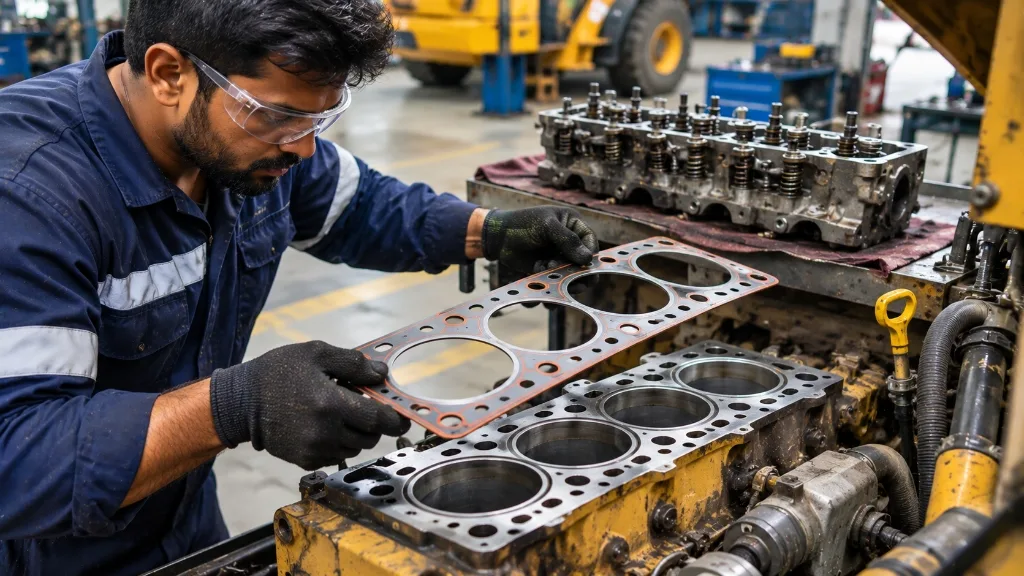
Once the head is removed, inspect more than the gasket. The cylinder head and block faces need to be checked for damage and flatness using the manufacturer’s limits. The head may require crack or pressure testing. Bolt condition, threads, liners, fire rings and coolant passages also matter.
Do not reuse torque values from another engine. Head-bolt sequence, tightening stages and whether bolts can be reused are model specific.
Why did the gasket fail?
A new gasket will not correct a clogged radiator, failed thermostat, poor coolant, water-pump problem, damaged fan drive or repeated overload. If overheating caused the failure, the cooling fault needs to be repaired in the same job.
Cummins warns against opening a hot cooling system and against filling a hot engine with cold water. Caterpillar recommends checking radiator fins, hoses, caps, coolant condition and contamination as part of cooling-system care.
The boring work matters here: cleaning mating faces correctly, measuring them, following the tightening procedure and refilling the cooling system without trapped air.
What should the estimate include?
Ask the workshop to separate:
- Diagnosis and dismantling
- Head inspection and machining
- Gasket and seal kit
- Head bolts if required
- Coolant, oil and filters
- Cooling-system repairs
- Assembly and final testing
If the head or block fails inspection, the workshop should pause and explain the options before spending further.
After the repair
The engine needs controlled warm-up and checks for coolant, oil and combustion leakage. Recheck fluid levels after the first operating cycle according to the service procedure. Watch the temperature and keep a record.
Complete Engine & Head Gasket Repair Services
- Cooling-system pressure and leakage diagnosis
- Combustion-gas and compression-related checks
- Cylinder-head removal and measured inspection
- Flatness, crack and pressure-testing requirements
- Gasket, bolt and sealing-component replacement
- Oil and coolant contamination assessment
- Controlled assembly, warm-up and post-repair checks
Why Choose Mech On Site for Engine Repair Requirements?
A head gasket should be replaced only after the failure and its cause have been assessed. Mech On Site gives customers a way to submit engine identity, overheating history and fluid-condition evidence before an engine-repair requirement is reviewed.
Testing method, machining, parts, assembly procedure, warranty and final checks remain subject to the engine model and the selected repair provider.
Frequently Asked Questions
1. What are common signs of a failed head gasket?
Possible signs include repeated overheating, coolant loss, combustion pressure in the cooling system, oil and coolant mixing or abnormal exhaust smoke. These symptoms can have other causes, so testing is needed before dismantling.
2. Can I continue operating the machine if the engine overheats?
Stop and investigate the cause. Continued operation can distort the cylinder head, damage bearings and turn a cooling fault into a larger engine repair.
3. Does a new gasket alone complete the repair?
No. The head and block surfaces, bolt condition, cooling system and original cause of overheating need inspection. Model-specific assembly and tightening procedures also matter.
4. What information should I provide for an engine-repair enquiry?
Share the engine model and serial number, meter hours, temperature history, smoke colour, coolant-loss pattern and photographs of the oil and coolant condition.
5. When should the authorised engine network handle the job?
Use the authorised route for warranty engines, electronic faults requiring OEM tools and work controlled by manufacturer procedures. Confirm warranty conditions before any outside dismantling.
Mech On Site recommendation
Mech On Site recommends confirming a suspected head-gasket failure through proper engine diagnosis before parts are ordered. A machine that is overheating, mixing oil and coolant or forcing coolant out should be stopped until it has been assessed. Continued operation can extend the damage to the cylinder head, bearings or engine block.
For an initial enquiry, please share the engine model and serial number, meter hours, temperature history, smoke colour and clear photographs of the oil and coolant condition. The repair proposal should identify the test used to confirm the failure and include checks for cylinder-head flatness, cracks, cooling-system condition and the original cause of overheating.
Engines covered by warranty should be referred to the authorised support channel before dismantling begins.
Related Mech On Site services
Engine-related requirements can be submitted through Mech On Site for initial diagnosis, repair support, inspection, spare-parts requirements and suitable mechanic assistance. The engine model, serial number and confirmed diagnosis remain necessary before compatible parts can be identified.
Where the machine will remain out of service, customers may also enquire about temporary rental equipment. Owners can submit an idle machine for rental consideration through the equipment-listing service.