
The rig rotates in free air, then loses torque in the hole. Or the feed stalls only after the hydraulic oil warms up. These are not useful faults to describe as “rig weak”.
The workshop needs the drilling condition with the machine condition.
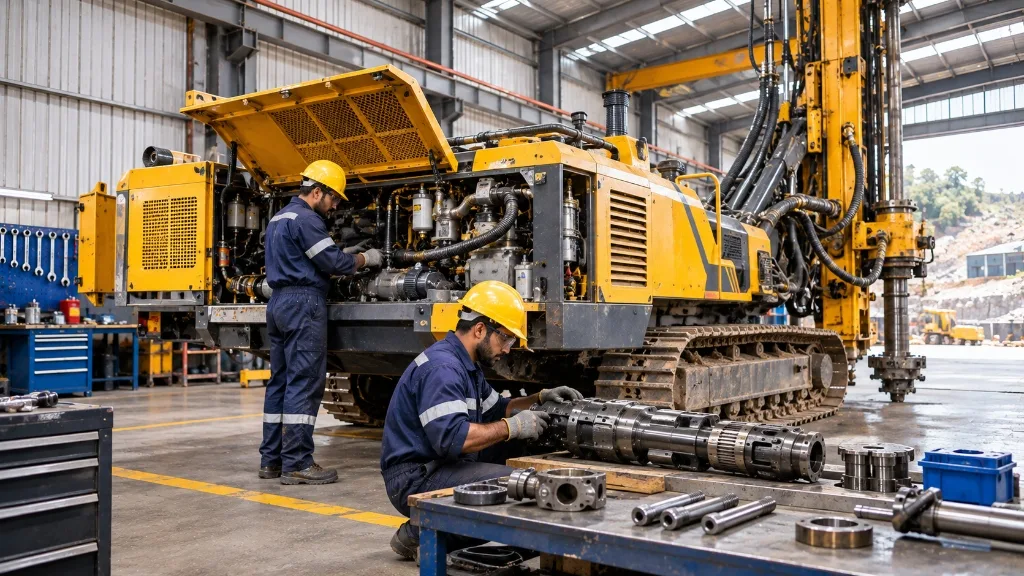
Identify the rig and the work it was doing
Send the model, serial number, engine hours and impact or drilling hours if recorded. Note the drilling method, hole size, rod and tool, ground condition, depth and operating mode.
A rotary rig, top-hammer rig, down-the-hole rig and exploration rig have different systems. Even within one family, control software and hydraulic circuits can change between models.
Photograph fault codes before anyone clears them. Save operator notes and telematics data if available.
Separate tooling trouble from machine trouble
A worn bit, damaged rod, poor flushing or unsuitable tool can look like low machine performance. Check the tool and drilling setup before stripping the rotary head or rock drill.
Listen for changes in sound. Note whether feed, rotation, percussion, flushing and rod handling are affected together or separately. One weak function and every weak function lead to different checks.
What belongs in a drilling rig inspection?
The exact list is model specific, but a workshop may need to check:
- Engine and cooling system
- Hydraulic oil, filters, pressure and temperature
- Pumps, valves, motors and cylinders
- Feed rails, chains or cylinders
- Rotary head or rock drill
- Compressor and flushing system
- Dust collector where fitted
- Rod handling and clamps
- Electrical controls, sensors and interlocks
- Mast, frame, pins and hose routing
- Undercarriage and travel drives
Epiroc service centres list rock-drill repair, equipment audits, machine inspections, rig-control support, field service and rebuild work as separate capabilities. That is a useful reminder: a workshop that repairs a diesel engine is not automatically equipped to rebuild a rock drill or diagnose rig automation.
Some faults should stay on site for diagnosis
If the rig cannot move safely, or if the fault depends on the hole and drilling load, begin with field diagnosis. Remove a component only after the test path points towards it.
Workshop work makes sense for controlled strip-down, machining, bench testing, rebuilds and repairs that need clean assembly. A combination often works best: diagnose the rig on site, repair the component in the workshop, then commission it back under working conditions.
Ask for measurements and a commissioning plan
Before approving a major component, ask what reading or inspection supports the decision. For a rock drill or rotary head, request the relevant wear findings. For hydraulic work, ask what will be cleaned and filtered before the repaired unit returns.
After repair, free-running movement is only the first check. The rig needs a controlled function test and, where safely possible, confirmation under the operating condition that produced the fault. Follow the manufacturer’s commissioning procedure.
The information a specialist needs
Send the workshop:
1. Machine and component identification 2. Fault codes and event history 3. Oil/filter observations 4. Tool, rod and hole details 5. A video with sound 6. Recent repairs and parts fitted
Complete Drilling Rig Workshop & Repair Services
- Rock-drill or rotary-head diagnosis
- Feed, rotation and alignment inspection
- Hydraulic pump, valve, motor and cylinder work
- Compressor, flushing and dust-system checks
- Rod handling, tooling and structural inspection
- Electrical control and fault-code diagnosis
- Specialist field support, workshop work and parts requirements
Why Choose Mech On Site for Drilling Rig Requirements?
Drilling performance depends on the rig, tooling, ground and operating settings. Mech On Site allows the project team to submit these details together so a requirement is not treated as a generic low-power complaint.
Provider selection, component testing, parts, field support and workshop scope remain subject to the exact rig and system involved.
Frequently Asked Questions
1. What information helps diagnose slow drilling?
Share the hole diameter, bit and rod arrangement, ground condition, penetration change, flushing performance and the point in the cycle where the rig slows. Machine hours and alarm codes add useful context.
2. Can the rig be repaired at the project site?
Many hose, sensor, wiring and diagnostic tasks can begin at site. Rock-drill rebuilding, major rotary-head work, structural repairs and controlled component testing may need a specialist workshop.
3. Why should the tooling be checked before the rig is blamed?
A worn bit, bent rod, poor alignment or unsuitable tooling can increase load and reduce penetration. Testing the rig without checking the drilling setup may lead to the wrong repair.
4. What should a drilling-rig repair report contain?
It should identify the complaint, readings, dismantling findings, parts, settings and final functional test. Model-specific tolerances should come from the applicable service information.
5. Can I request a mechanic for a drilling project?
A project may submit a short-term or long-term mechanic requirement with rig models, location, shift pattern and expected duties. Relevant rig experience and engagement terms need confirmation.
Mech On Site recommendation
Mech On Site recommends describing a drilling-rig fault with the operating details that influence performance. These include the hole diameter, ground condition, bit and rod arrangement, change in penetration rate, flushing performance and the point in the drilling cycle where the problem begins.
Please provide the rig model and serial number, rock-drill or rotary-head details, operating hours, alarm codes and recent repair history. A video with sound may support the assessment when it can be recorded safely.
The service scope should state whether the first visit is intended for field diagnosis or component removal. Structural work, specialist rebuilds and repairs controlled by the manufacturer should be assigned only to a provider with the required competence, procedures and tooling.
Related Mech On Site services
Drilling-rig requirements can be submitted through Mech On Site for field diagnosis, specialist workshop work, inspection, spare parts and short-term or long-term mechanic support. The selected provider must have experience with the exact rig, drill or control system involved.
A project may also submit a rental requirement when substitute drilling capacity is needed. Owners with suitable equipment can separately submit a machine through the rental-listing service.