
The excavator still works, but the operator has changed the way he uses it. He avoids a steep travel path. He keeps engine speed higher to curl the bucket. He stops once in the afternoon to let it cool.
Those habits are fault information.
Write them down before the machine enters the workshop. A good diagnosis begins with what changed during work, not with the first part that looks worn.
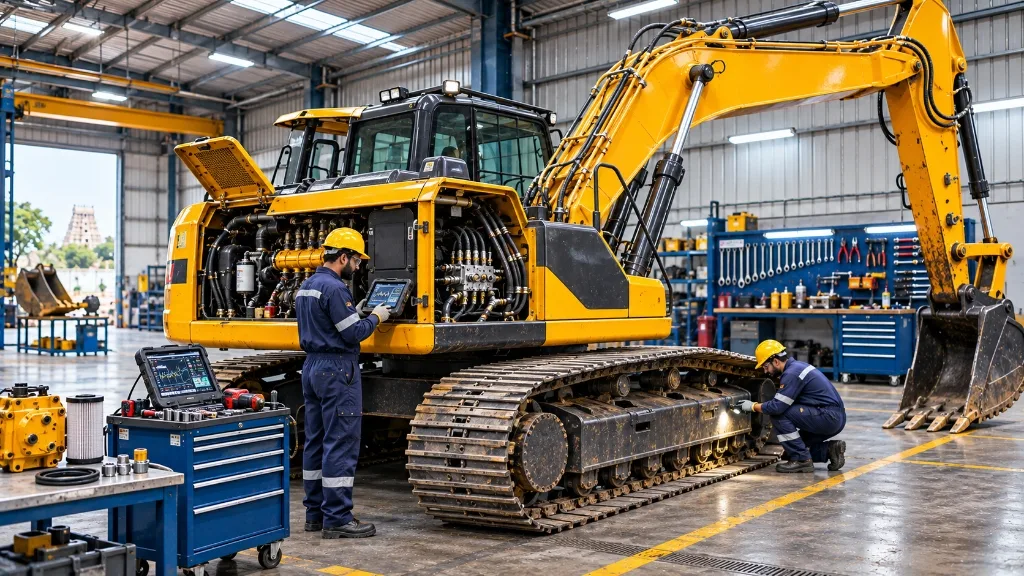
Decide whether the whole machine needs transport
Many faults should be diagnosed on site first. The machine may be unsafe or expensive to move, and the symptom may appear only under the normal attachment and ground condition.
Workshop transport makes sense for engine overhaul, major hydraulic work, line boring, controlled structural repair, undercarriage work or several connected repairs. Sometimes only the pump, cylinder, motor or engine needs workshop attention.
Before movement, check whether the machine can travel, slew, brake and load safely. Arrange the correct trailer and transport permissions.
Give the workshop a clean complaint
Send the model, serial number, hours and attachment. Explain:
- Which function is slow, weak, noisy or drifting
- Whether every hydraulic function is affected
- Cold versus hot behaviour
- Warning codes and temperatures
- Oil or coolant loss
- Fuel use or smoke changes
- Recent repairs and filters fitted
- Ground and application when the fault appears
A video with sound helps. So do oil and filter photos.
The inspection should cover systems, not guesses
For a hydraulic fault, the workshop may compare cycle times, pressures, flow, case drain, oil temperature and function-specific leakage. For overheating, it should inspect the cooling system, airflow, coolant and engine condition. Travel and swing complaints need their own checks.
The undercarriage deserves attention during workshop intake. Worn rollers, sprockets, idlers, track links and poor tension can account for a large part of the repair cost. Volvo CE treats undercarriage inspection as a distinct maintenance activity because poor condition can affect safety and other components.
Ask what the evidence says
Before approving a main pump, swing motor, travel motor or engine rebuild, ask for the reading, measurement or inspection that supports it. Request options where available:
- Repair the existing component
- Fit a remanufactured unit
- Fit a new part
- Continue operating with monitoring
The cheapest part is not always the cheapest job once oil, filters, transport and a second removal are counted.
Cooling work needs more than radiator washing
Dust and mud can block radiator and cooler airflow. But repeated overheating may also involve coolant loss, fan drive, thermostat, water pump, contamination or internal engine trouble.
Caterpillar advises inspection of radiator fins, hoses and the cap, use of the correct coolant and cooling-system service according to the machine manual. High-pressure water can damage fins, so cleaning method matters.
Final testing should recreate the complaint safely
Warm the machine and test the affected functions. Watch for leaks after the oil heats. Confirm travel, swing, boom, arm and bucket response as relevant. Check warning codes again.
Ask for the diagnosis, parts, oil, filters, measurements and final test in writing. Record the delivery hours and keep the old parts where practical.
Complete Excavator Workshop & Repair Services
- Engine, cooling and fuel-system diagnosis
- Main pump, valve, cylinder and hydraulic repair
- Swing motor, travel motor and final-drive work
- Electrical control and fault-code assessment
- Undercarriage, track and structural inspection
- Bucket, pin, bush and attachment repair
- Field diagnosis, workshop work, parts and mechanic requirements
Why Choose Mech On Site for Excavator Workshop Requirements?
Excavator faults can involve several systems that produce similar symptoms. Mech On Site allows owners to submit hot and cold behaviour, fault codes, fluid condition and machine details before a major component decision is made.
Repair scope, parts, workshop capability, testing, warranty and commercial terms remain subject to diagnosis.
Frequently Asked Questions
1. Should a weak excavator pump be replaced immediately?
No. Low output may also involve relief settings, control signals, suction restriction, engine speed or internal leakage elsewhere. Pressure and flow findings should support a pump decision.
2. When should an excavator be moved to a workshop?
Workshop movement is appropriate for engine, pump, swing or travel motor, final-drive and structural work requiring dismantling. Initial hydraulic, electrical and cooling diagnosis can often begin at site.
3. What details should I share for excavator diagnosis?
Provide the model, serial number, hours, fault codes, hot and cold symptoms, service history and photographs of oil, coolant or visible leakage. A safe operating video can show cycle-time changes.
4. What should be inspected in the undercarriage?
Check track tension, rollers, idlers, sprockets, links, shoes and final-drive leakage. Wear should be measured against the machine procedure before a full replacement is proposed.
5. Can I rent another excavator while mine is repaired?
A rental requirement can be submitted with the machine class, attachment, working depth or reach, site conditions, location and dates. Transport, operator and fuel terms need confirmation.
Mech On Site recommendation
Mech On Site recommends beginning with field diagnosis when the excavator can be operated and tested safely. Workshop transport is generally more appropriate when the engine, main pump, swing or travel motor, final drive or structure requires dismantling and controlled repair.
Please share the machine model, serial number, meter hours, fault codes, hot and cold symptoms and photographs of the oil or coolant condition. A short operating video may also assist where it can be recorded safely.
Before approving replacement of a major component, request the pressure, flow, temperature or inspection findings supporting that recommendation. Warranty machines and electronic faults requiring OEM tools should remain within the authorised support route.
Related Mech On Site services
Excavator requirements can be submitted through Mech On Site for on-site diagnosis, workshop repair, machine inspection, spare parts and suitable mechanic support. The request should identify whether the concern involves the engine, hydraulics, undercarriage, controls or attachments.
Customers facing extended downtime may also enquire about an excavator on rent. Owners with an idle excavator can submit it through the equipment-listing service.