
A large shed is not proof of a good heavy equipment workshop. Neither is a row of dismantled machines.
What matters is whether the team can receive the machine properly, isolate the fault, control the parts, carry out the repair and prove that it worked. If one of those steps is missing, the owner usually pays through repeat visits and longer downtime.
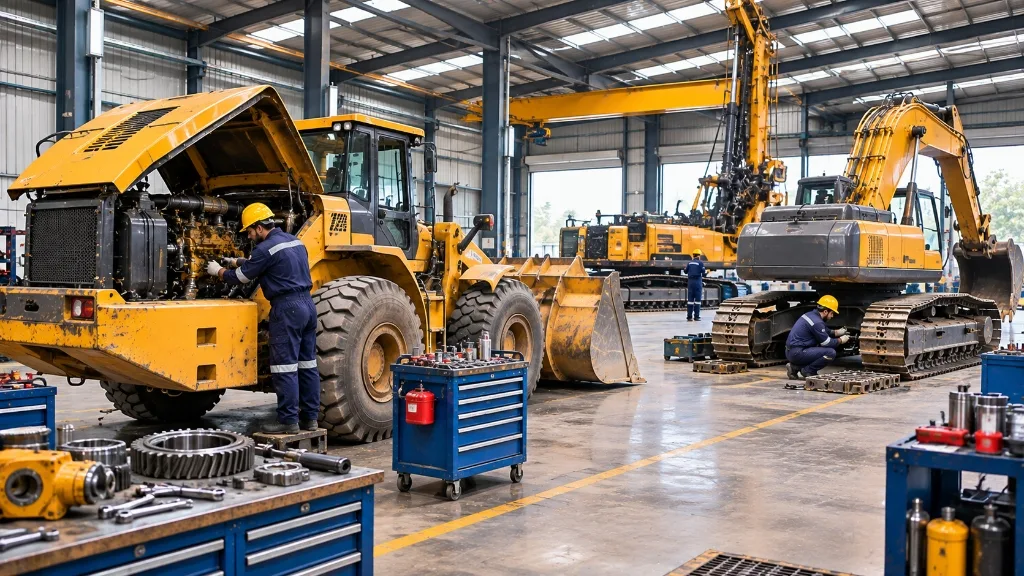
The job should begin with an intake record
The workshop should record the model, serial number, hour reading, attachments and visible damage before work starts. The operator’s complaint needs to be written in plain language.
“Machine weak” is too vague.
Is the travel weak? Is the boom slow? Does power drop only after the engine gets hot? Did the fault begin after a hose, filter or electrical repair? A heavy machinery mechanic needs that detail before picking up a tool.
Photos at the time of intake also protect both sides. They prevent later arguments over a damaged panel, missing tool or old leak.
Different systems need different skills
One mechanic rarely specialises equally in engines, hydraulics, electrical controls, welding, undercarriage work and air-conditioning. A strong workshop knows where its own limit is.
For example, an excavator that has slow hydraulics may need pressure and flow checks. A drilling rig control fault may need model-specific diagnostic software. A cracked boom needs a repair procedure and qualified welding assessment, not a quick plate added wherever it fits.
Ask who will handle the job and what similar work that person has done. “Our mechanic has 15 years’ experience” is still incomplete if those years were spent on a different system.
Clean work matters most around hydraulics
Hydraulic parts can be damaged by dirt introduced during repair. Open hoses should be capped. Clean oil should not be poured from a dusty container. Stripped pumps and valves need a controlled workbench, not a floor beside grinding and welding.
Parker’s hydraulic service material lists dirty fluid, poor filter maintenance, incorrect parts and incorrect repair procedures among causes of pump wear. That is why workshop cleanliness is part of the technical work, not housekeeping.
Parts approval should not happen after fitting
Before fitting a major part, the workshop should tell you:
- The part number and brand
- Whether it is new, repaired or remanufactured
- Why it needs replacement
- What test or measurement supports that decision
- Whether the old part will be returned
- What warranty applies
For imported or older equipment, the right part may take time. A local substitute might get the machine moving, but it can also change clearances, oil flow, electrical compatibility or service life. The decision should be made openly.
Workshop repair or field service?
Field service is usually better when the machine cannot move safely, the first job is diagnosis, or the fault is limited to an accessible component. Workshop repair is better when the job needs dismantling, machining, bench testing, controlled welding or a clean overhaul area.
Sometimes the best answer is both: diagnose on site, remove only the failed component, repair it in the workshop and fit it back at the project.
Volvo Construction Equipment describes inspection, fluid analysis, planned maintenance, repair and rebuild as separate service activities. That separation is useful. Do not approve a rebuild when the machine has not yet been inspected well enough to show that it needs one.
Final testing should match the complaint
If the complaint was overheating, an idle test is not enough. If the travel motor was weak, test the travel function. If the boom drifted, record whether it still drops beyond the model’s permitted limit.
The workshop should provide a job card, replaced-parts record and the result of the final check. Keep these with the machine’s service history. They become useful when the same symptom returns or when you sell the machine.
Choosing the heavy machinery mechanic
Pick the mechanic for the failed system rather than the machine name alone. Ask what the person will check first, what readings will be taken and what would change the repair decision. A real mechanic is comfortable saying, “We need to test this before I can price the part.”
Complete Heavy Equipment Workshop & Repair Services
- Field diagnosis and workshop inspection
- Diesel-engine, cooling and fuel-system repair
- Hydraulic pump, motor, valve and cylinder work
- Transmission, drivetrain, axle and brake repair
- Electrical, electronic and control-system diagnosis
- Undercarriage, tyre, structure and attachment inspection
- Preventive maintenance, spare-parts and mechanic requirements
Why Choose Mech On Site for Heavy Equipment Workshop Requirements?
A heavy-equipment repair request is more useful when it is classified by the failed system rather than the machine name alone. Mech On Site allows customers to submit machine identity, site conditions, symptoms and supporting photographs so the requirement can be assessed in the right technical category.
Provider suitability, repair scope, test method, parts, price and turnaround must be confirmed after inspection.
Frequently Asked Questions
1. What work can a heavy equipment workshop handle?
A suitable workshop may handle engine, hydraulic, drivetrain, electrical, structural and undercarriage work. Capability should be confirmed for the exact machine and failed system because one workshop may not be equipped for every type of repair.
2. How should I compare two workshop quotations?
Compare the diagnosis, parts brand, labour, outside machining, fluids, transport and final testing as separate items. A lower total is difficult to judge when the scope and exclusions are not written.
3. What should be checked before transporting a disabled machine?
Confirm safe isolation, attachment position, machine dimensions, weight, tyre or track condition and loading method. A transport decision should also consider whether a field visit could identify the fault before mobilisation cost is incurred.
4. Can Mech On Site support a long-term mechanic requirement?
A customer may submit short-term or long-term mechanic requirements with the machine mix, location, shift pattern and expected work. Availability, experience and engagement terms need separate confirmation for the project.
5. Should the workshop return the replaced parts?
Request this before approving the job, subject to warranty returns and safe handling. Retained parts, photographs and measurements can help the owner understand the failure and maintain a useful service record.
Mech On Site recommendation
Mech On Site recommends selecting a heavy equipment workshop according to the system involved, rather than the machine category alone. Transmission overhaul, hydraulic pump testing and structural repair each require different technical expertise, tooling and inspection records.
When submitting a service requirement through Mech On Site, please share the machine make, model, serial number, operating hours, site location and a clear description of the fault. Fault codes, photographs of the oil or coolant condition and a short video can also support the initial assessment when they can be captured safely.
The workshop quotation should clearly separate diagnosis, parts, labour, outside machining and final testing. Work covered by warranty, or requiring manufacturer-controlled procedures and software, should remain within the authorised service network.
Related Mech On Site services
Heavy-equipment owners can submit requirements for field diagnosis, workshop repair, condition inspection, spare parts and specialist mechanics through Mech On Site. Support requirements may be short-term for a breakdown or longer-term for a project or fleet.
Where repair downtime affects the work programme, customers can also enquire about suitable equipment on rent. Machine owners may use the equipment-listing service to offer an available machine for rental consideration.