
Hydraulic parts often arrive at a workshop after someone has already changed the oil, tightened the relief valve or replaced a hose. By then, the original symptom is harder to read.
Bring the history with the component.
Was the system slow when cold or only after heating up? Did every function lose power? Was there metal in the filter? Did the cylinder drift, leak outside or bypass oil internally? These details change the repair path.
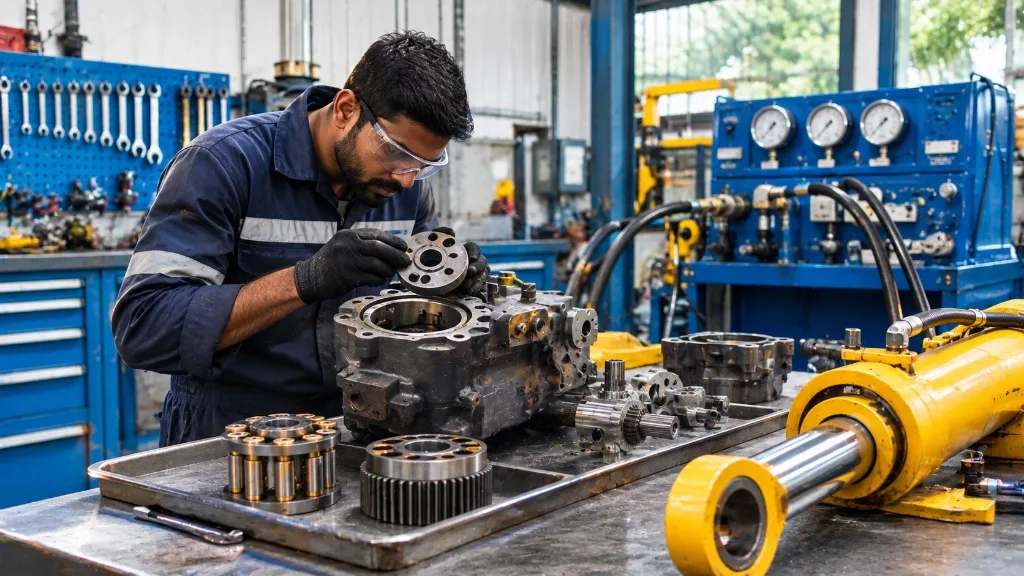
Do not send only “the pump”
A pump can be damaged by a problem elsewhere in the system. Dirty oil, a restricted suction line, incorrect fluid, poor cooling, a relief-valve fault or contamination left after an earlier failure can damage the repaired unit again.
The workshop needs the machine model, component part number, oil type, operating temperature, complaint and any available pressure, flow or case-drain readings. Mark every hose and port before removal. Cap the openings immediately.
Cleanliness is part of the repair
Hydraulic clearances are small. Dust from grinding, dirty wash fluid or lint from a rag can undo careful machining.
A proper hydraulic workshop should have a clean dismantling and assembly area. Parts need to be washed, inspected and protected after cleaning. Open ports should remain capped. New oil poured from a dirty drum is not clean oil.
Parker’s hydraulic guidance identifies particle contamination, dirty fluid, poor filter maintenance, unsuitable oil and incorrect repair procedures as causes of pump wear. It also notes that restrictions and poor cooling can raise fluid temperature.
What should happen after dismantling?
The workshop should measure the parts that determine performance. Looking at them is not enough.
For a cylinder, this can include the rod, barrel, piston, gland, seals, threads and mounting eyes. A new seal kit will not last if the rod is scored or bent. For a pump or motor, the inspection depends on its design, but wear surfaces, bearings, shafts, control parts and clearances need to be checked against service data.
A control valve may need spool, bore, spring, solenoid and sealing checks. Polishing a visible mark is not always a repair.
Ask for photographs and measurements for major wear. If a part is being machined or plated, ask what final dimension and surface finish will be used.
Repair, remanufacture or replace?
Repair makes sense when the housing and main hard parts are serviceable, correct spares are available and the workshop can test the result. Replacement becomes more sensible when critical surfaces are badly damaged, cracks are present, parts are unavailable or previous repairs have already removed too much material.
It depends on the component. A seal-only replacement becomes costly if the cylinder returns two weeks later.
The estimate should separate inspection, machining, seals, bearings, hard parts, assembly and testing. It should also state whether the component is being repaired to a measured standard or simply made operational.
How should the repair be tested?
Testing should match the component and its rated operating conditions. The workshop should explain what it can test on a bench and what must be confirmed after fitting to the machine.
After installation, the system may need flushing, filter replacement, oil checks and controlled commissioning. If the previous component failed internally, fitting a clean repaired pump into contaminated lines can destroy it again.
Keep the repair report, measurements and test result with the machine record. They help if the symptom returns and make the next diagnosis faster.
Before choosing a hydraulic workshop
Ask five questions:
1. How will you confirm the fault before dismantling? 2. Which measurements will decide whether parts are reused? 3. How do you control contamination during assembly? 4. What test will be performed after repair? 5. What must be cleaned or checked on the machine before refitting?
Complete Hydraulic Component Repair Services
- Hydraulic-system fault diagnosis
- Pump and motor inspection or rebuild requirements
- Cylinder resealing, tube and rod assessment
- Control-valve inspection and testing
- Hose, fitting and leakage repair
- Oil, filter and contamination assessment
- Circuit cleaning, refitting and commissioning requirements
Why Choose Mech On Site for Hydraulic Repair Requirements?
Hydraulic repair begins with the machine symptom and the wider circuit, rather than the removed component alone. Mech On Site allows customers to submit the machine, component plate, oil condition and available test readings so the requirement can be reviewed with the wider circuit in mind.
Workshop capability, measurements, parts, bench testing and commissioning responsibility should be agreed before the component is dismantled.
Frequently Asked Questions
1. Why did the repaired hydraulic component fail again?
A repeated failure may come from contamination, incorrect oil, a blocked line, poor cooling, wrong settings or debris left in the circuit. The component and the machine system need to be considered together.
2. What should be recorded before removing a hydraulic pump?
Record hot and cold symptoms, noise, temperature, oil condition, fault codes and any pressure or flow readings taken correctly. Photograph the pump plate and hose positions before disconnection.
3. Can a hydraulic cylinder be repaired on site?
Minor external work may be possible on site, but rod, tube, piston, seal-gland and internal inspection usually need clean workshop conditions and suitable handling equipment. The repair route depends on cylinder size and damage.
4. What should a hydraulic repair report include?
It should list inspection findings, measured wear, replaced parts, machining, assembly checks and bench-test results where applicable. It should also state what must be checked on the machine before refitting.
5. Do I need genuine parts for every hydraulic repair?
Part choice depends on the component, application, warranty and available specification. Whatever option is proposed, the brand, part number, material or seal specification and warranty terms should be written in the quotation.
Mech On Site recommendation
Mech On Site recommends documenting the reason for removing a hydraulic pump, motor or cylinder before it is sent for repair. Photographs of the component plate, oil condition, filter debris, failed seals and hose connections can provide valuable diagnostic context. It is also helpful to note whether performance changes as the hydraulic oil reaches operating temperature.
A service requirement should include the machine model, component number, observed symptoms, previous repair history and any pressure or flow readings taken by a qualified technician. The workshop report should record its inspection findings, measured clearances, replaced parts and bench-test results.
Before a rebuilt component is installed, the machine circuit should be inspected and cleaned as required by the manufacturer’s procedure. Otherwise, contamination or an unresolved circuit fault may damage the repaired component again.
Related Mech On Site services
Hydraulic requirements may involve on-site diagnosis, workshop repair, component inspection, spare parts or a mechanic with experience in the affected system. Mech On Site accepts enquiries for these requirements using the machine and component details supplied by the customer.
If a failed hydraulic system is expected to keep the machine idle, customers may also submit an equipment-rental requirement. Available machines can separately be offered through the rental-listing service.