
A piling rig works through several high-load systems at the same time. The rotary drive, crowd system, winches, mast, kelly bar, hydraulics and undercarriage all affect production. A slow or unstable machine therefore needs system diagnosis, not an immediate parts list.
Begin with the exact rig model, serial number, hours and current attachment. Record pile diameter, depth, tooling, ground condition and the operating stage at which the fault appears.
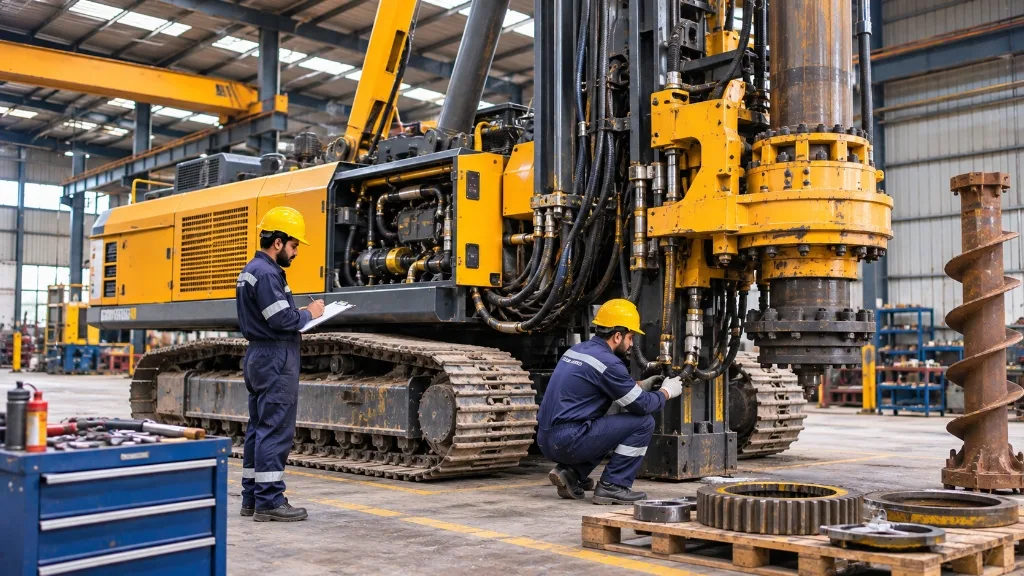
Turn the operator complaint into testable facts
Useful workshop information includes:
- Rotary torque or speed has dropped
- Crowd force is weak or jerky
- The main winch does not hold or pulls unevenly
- The kelly bar is not locking or releasing correctly
- Hydraulic oil overheats
- Mast movement is abnormal
- The rig leans, tracks poorly or shows an alarm
Photographs of the tooling and a short video under safe operating conditions can help the first diagnosis.
Inspect the rotary drive and tooling connection
Check the rotary head for leakage, abnormal noise, bearing play, mounting condition and output using the manufacturer procedure. Inspect the drive adapter, kelly drive keys and related wear surfaces.
Tooling affects the machine. A damaged or unsuitable auger, bucket or core barrel can increase load and create vibration. Liebherr lists application-specific deep-foundation attachments, which reinforces the need to match tooling to the work rather than judging the carrier alone.
Check the kelly bar and crowd system
Inspect the kelly bar for deformation, cracked welds, damaged locking pockets, wear and poor section movement. Cleaning and lubrication must follow the maker's instructions; excess grease or the wrong product can attract abrasive material.
For cylinder or winch crowd systems, inspect cylinders, ropes, sheaves, guides, pins and mounting points. Record wear and measurements against model limits.
Winches, ropes and brakes need defined checks
Main and auxiliary winches should be checked for rope condition, drum spooling, brake holding, leakage and abnormal noise. Rope inspection and discard decisions must follow the applicable procedure and standard, not a casual visual judgement.
Never work below suspended tooling. Isolation, support and lifting arrangements must be agreed before repair begins.
Inspect mast, structure and undercarriage
Check the mast or leader, foot, braces, pins, locking points and weld areas for damage or movement. A structural concern may need a qualified inspection and approved repair method.
The undercarriage carries high loads during travel and setup. Inspect track tension, rollers, idlers, sprockets, final drives and visible frame condition. Also confirm that the rig can be levelled and set up as required.
Test the hydraulic and control systems when hot
Inspect oil, filters, cooler, pumps, valves, hoses and cylinders. Use the correct hydraulic diagram and test points. If power falls after warm-up, repeat pressure and flow checks at operating temperature.
Save fault codes before clearing them. Inspect sensors, wiring, joysticks, display inputs and safety interlocks. Avoid bypassing an interlock to make the machine operate; the cause must be repaired and the function retested.
Define field work and workshop work separately
Some hose, sensor, wiring and diagnostic work can be done at site. Major rotary, winch, cylinder, kelly or structural work may require a piling machine workshop with suitable lifting, fixtures and test equipment.
Complete Piling Machine Workshop & Repair Services
- Rotary-head and drive-system diagnosis
- Kelly bar, locking-pocket and tooling inspection
- Crowd cylinder or crowd-winch system checks
- Main and auxiliary winch, rope and brake inspection
- Mast, leader, pins and structural assessment
- Hydraulic, control and fault-code diagnosis
- Undercarriage, final-drive, parts and mechanic requirements
Why Choose Mech On Site for Piling Machine Requirements?
Piling-rig repair planning needs the application, tooling, ground condition and machine configuration. Mech On Site allows contractors to submit these details when seeking field diagnosis, workshop repair, parts, project mechanics or temporary rental equipment.
Repair method, provider capability, testing, inspection obligations and commercial terms remain subject to technical assessment.
Frequently Asked Questions
1. What details are needed for a piling-rig repair request?
Provide the rig model, serial number, hours, pile diameter and depth, tooling, ground condition, fault codes and the function that has slowed or become unstable.
2. Can a rotary-head fault come from the tooling?
Yes. Damaged or unsuitable tooling, kelly-bar wear, poor locking or alignment can increase load and vibration. The drive and the tool connection should be inspected together.
3. When should the kelly bar be removed for workshop inspection?
Removal may be needed when there is deformation, cracked welding, damaged locking pockets, severe wear or poor section movement. Handling and inspection must follow the rig procedure.
4. What should be checked after winch or rope repair?
Check rope identity and condition, drum spooling, sheaves, brakes, mounting and the relevant functional test. Discard criteria and inspection responsibility must follow the applicable procedure.
5. Can I request another piling rig during a long repair?
A rental enquiry may include pile type, diameter, depth, tooling, site access, ground condition, location and project dates. Machine suitability and availability require separate confirmation.
Mech On Site recommendation
Mech On Site recommends documenting the piling application before repair planning begins. The pile diameter and depth, tooling, ground condition, rig setup and the function that has slowed or become unstable all provide useful diagnostic context. A rotary-head complaint may originate in the tooling, crowd system, hydraulics or controls.
Please share the rig model, serial number, operating hours, site location, fault codes and photographs of the kelly bar and tooling. A safe operating video may also assist the initial review.
The inspection report should present separate findings for the rotary drive, winches, mast, hydraulic system and undercarriage. Structural work, wire-rope decisions and load-related testing must follow the manufacturer’s procedure and any applicable competent-person requirements.
Related Mech On Site services
Piling-rig owners and contractors can submit requirements through Mech On Site for diagnosis, workshop repair, inspection, spare parts and project-based mechanic support. The rig configuration, tooling, ground condition and current fault should accompany the request.
Where project continuity requires another machine, customers may also submit a piling-equipment rental enquiry. Owners with an available rig can offer it for rental consideration through the equipment-listing service