
"ROC" is commonly used on sites for certain surface drilling rigs, but the name alone is not enough for repair planning. The workshop needs the manufacturer, exact model, serial number, rock drill type and current machine configuration.
Also share the application. A rig drilling production blast holes has different wear and performance demands from a machine used in quarry development or specialised drilling.
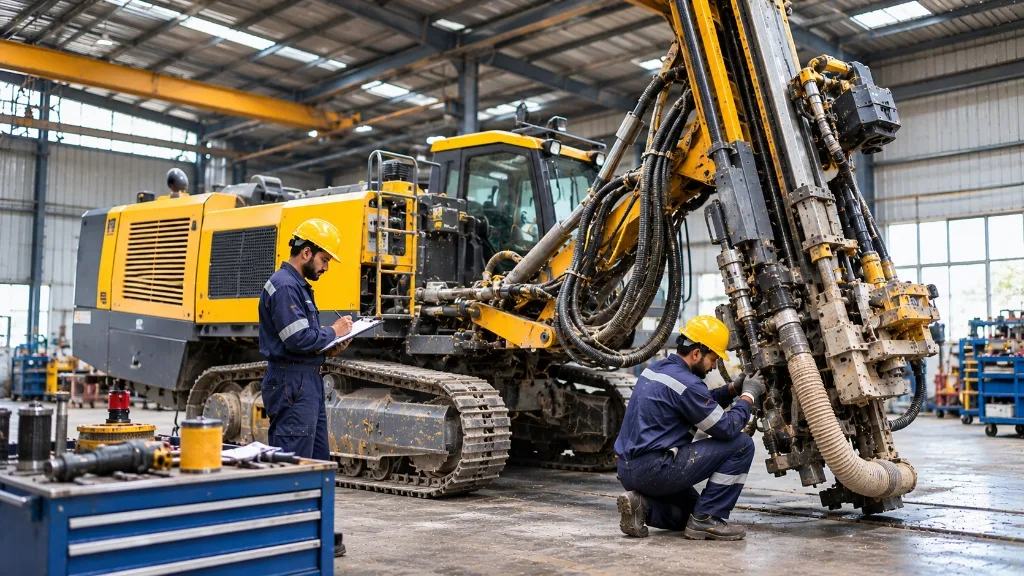
Record the drilling complaint properly
Do not send only the message "drilling is slow." Record what the operator sees:
- Penetration rate has fallen
- The drill steel is sticking or vibrating abnormally
- Rotation is weak or irregular
- Feed force is unstable
- Flushing air is low
- Dust collection is poor
- Hydraulic oil is overheating
- The rig shows a fault code or derates
Include hole diameter, bit type, rock condition and recent consumable changes. A worn bit or incorrect setup can look like a machine fault.
Rock drill service is specialist work
The rock drill should be inspected for leakage, lubrication condition, abnormal impact noise, wear and contamination. Its accumulators, seals, internal parts and settings require the correct tools and procedure.
Epiroc describes dedicated rock drill service programmes with inspection, resealing, testing and service records. This is a useful standard for owners: ask how the repaired drill will be tested and documented before it returns.
Check feed, rotation and alignment together
Inspect the feed beam, chain or cable system, guides, rollers, feed motor and cylinders. Wear or poor adjustment can affect alignment and add load to the drill string.
The rotation unit should be checked for output, leakage, bearings and mounting condition. Inspect the drill steel support, rod handling components and any visible structural damage.
Do not adjust feed, impact and rotation settings by guesswork. Settings depend on the rig, drill and ground condition.
Include air, flushing and dust collection
For rigs with an onboard compressor, check filters, oil, coolers, hoses, valves and delivered air performance according to the model procedure. Low air can reduce flushing and increase tool wear.
Inspect the dust collector, suction hose, pre-separator and filters. Poor dust control affects visibility, component life and site exposure.
Hydraulic and control diagnosis needs data
Check oil condition, filtration, cooler cleanliness, pumps, valves, hoses and cylinders. Confirm pressures and flows at the specified test points. If the issue appears only when hot, test after the machine reaches the relevant condition.
Save display codes and machine data before clearing faults. Inspect sensors, harnesses, connectors, control modules and communication lines rather than replacing electronic parts by trial.
Decide whether the rig or component should move
A field technician may be able to diagnose controls, hoses, sensors and some hydraulic faults. A rock drill rebuild or major feed, compressor or structural repair may need a properly equipped ROC workshop.
Complete ROC Drilling Rig Workshop & Repair Services
- Rock-drill inspection and rebuild requirements
- Feed beam, chain or cable and guide checks
- Rotation unit, rod handling and alignment diagnosis
- Compressor, flushing and dust-collection inspection
- Hydraulic pump, valve, motor and cylinder work
- Electrical controls, sensors and fault-code assessment
- Specialist testing, parts and mechanic requirements
Why Choose Mech On Site for ROC Drilling Rig Requirements?
ROC and surface-drill faults need both machine data and drilling-condition details. Mech On Site allows customers to submit the rig, rock drill, tooling and site symptoms together when seeking repair, parts, manpower or rental support.
Provider experience, component testing, repair procedure and warranty remain subject to the exact rig and system.
Frequently Asked Questions
1. What should I record when a ROC rig drills slowly?
Record the hole diameter, bit and rod setup, rock condition, penetration change, flushing air and dust-collector performance. Note whether the fault changes after the hydraulic oil warms.
2. Does the rock drill always need removal for diagnosis?
Not always. Leakage, lubrication, settings, feed condition and operating data can be checked first. Internal rebuild work needs specialist tooling and testing.
3. Can low flushing air damage drilling performance?
Yes. Poor air delivery can affect cuttings removal, heat and tool life. Check the compressor, filters, cooler, hoses, valves and drilling setup according to the rig procedure.
4. What should the ROC workshop test after repair?
The workshop should confirm the repaired component’s function, leakage, settings and applicable test results. Final rig testing should recreate the original operating complaint where this can be done safely.
5. Can I request a specialist mechanic or rental rig?
A mechanic or rental requirement can be submitted with the rig model, rock drill, location, shift pattern, hole specification and project dates. Suitability and availability need confirmation.
Mech On Site recommendation
Mech On Site recommends recording the drilling conditions before settings or components are changed on a ROC or surface drill. The hole diameter, bit and rod arrangement, rock condition, penetration change, flushing air and dust-collector performance help distinguish consumable wear from a rock-drill, feed, rotation or compressor fault.
Please share the exact rig and rock-drill model, serial numbers, operating hours, alarm history and recent service work. The service provider should confirm whether the component can be tested at site or requires specialist workshop equipment.
Rock-drill rebuilds, structural repairs and control-system work should be assigned only where the correct technical procedures and test capability are available.
Related Mech On Site services
ROC and surface-drill requirements can be submitted through Mech On Site for field diagnosis, specialist repair, inspection, rock-drill or hydraulic parts and experienced mechanic support. The exact rig and rock-drill identity should be included before service suitability is assessed.
A project may also enquire about rental equipment when substitute drilling capacity is required. Owners with an available rig can submit it through the equipment-listing service.