
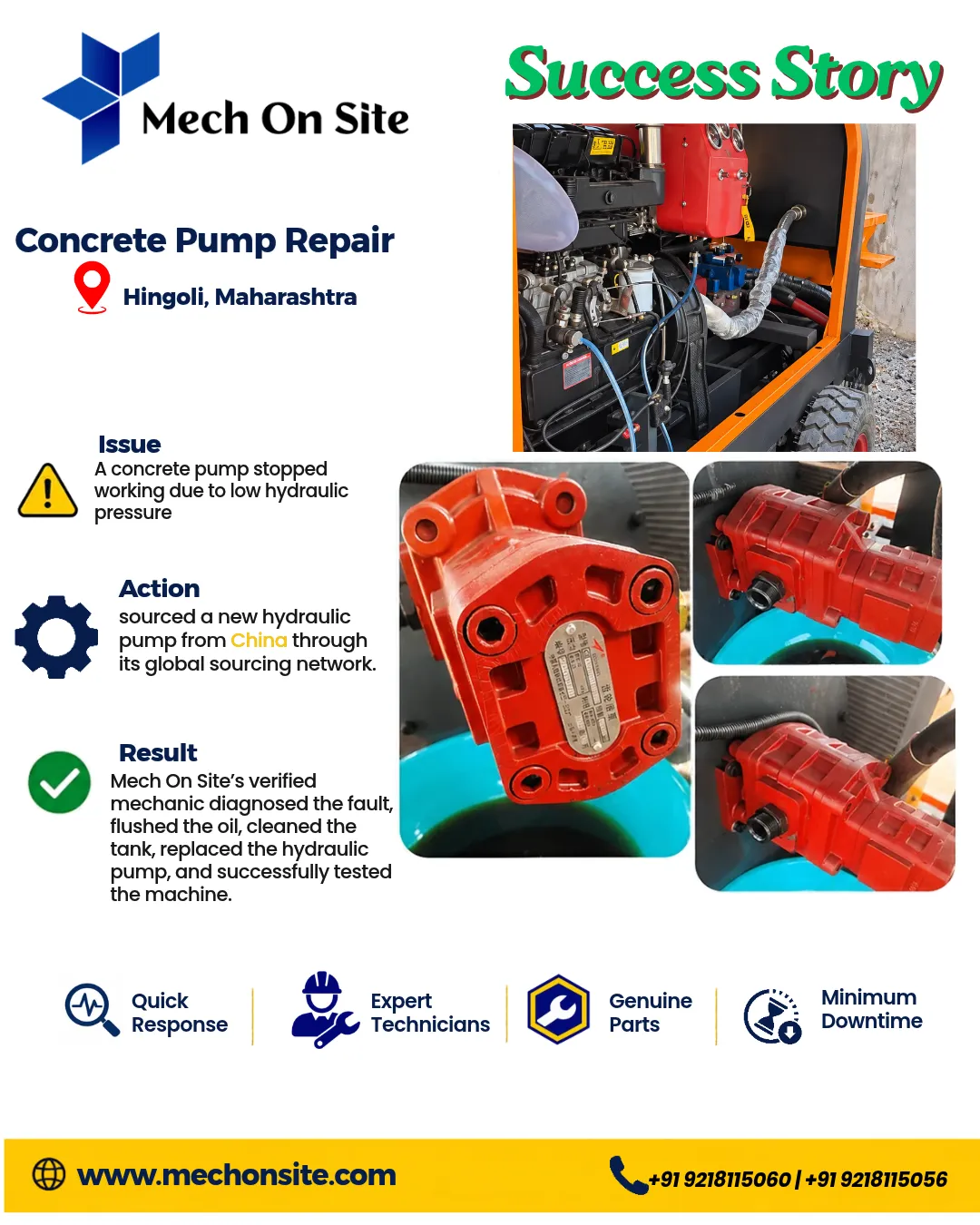
A concrete pump stopped working at a site in Hingoli, Maharashtra. Hydraulic pressure was insufficient. The repair described here involved diagnosis, sourcing a replacement hydraulic pump and cleaning the oil system before testing the machine again.
How hydraulic power moves concrete
Concrete pumps deliver concrete through a pipeline to the placement point. In a typical hydraulically driven piston pump, the hydraulic pump supplies oil flow to the drive system. The concrete moves through the concrete-side pumping mechanism; it does not pass through the hydraulic pump.
That distinction matters during a breakdown. Low output may involve hydraulics, concrete-side wear, controls, mix behaviour or a delivery-line restriction. Low pressure alone is not enough to order a new hydraulic pump.
The Hingoli repair: issue, action and result
In this Mech On Site case, the mechanic diagnosed a faulty hydraulic pump after the machine stopped with insufficient hydraulic pressure. A replacement was sourced from China through the parts-sourcing network.
The mechanic flushed the hydraulic oil, cleaned the tank and replaced the pump. Operational testing included concrete flow, after which the machine returned to service.
Watch the Hingoli concrete pump repair
Why oil-system cleaning mattered during this repair
Replacing the failed component was part of the job. Cleaning the tank and addressing the oil system were also included. The required cleaning, filtration and commissioning procedure depends on the machine and failure, so the same repair sequence should not be copied blindly to another pump.
When requesting a replacement, send the machine model and the installed pump identification. Clear nameplate photographs and connection details help the supplier check the specification before dispatch. A similar-looking housing is not a compatibility check.
Symptoms worth recording before the technical call
- Whether pumping becomes weak from cold or only after the oil heats up.
- Hydraulic temperature, displayed alarms and any readings already recorded safely.
- Recent oil, filter, hose or component changes.
- Whether the fault follows a change in concrete mix or delivery-line arrangement.
Do not open a delivery line to investigate a suspected blockage while it is pressurised. Stop and follow the manufacturer-approved isolation and pressure-release procedure with trained personnel.
Maintenance beyond the hydraulic pump
Oil condition and filtration, cooling, hoses, wear parts and lubrication all need attention under the machine schedule. A boom-equipped pump also has structural and safety inspection requirements separate from a pumping-unit repair. See the concrete pump equipment guide and workshop inspection article for those broader scopes.
Concrete pump repair questions
Does low hydraulic pressure always mean pump failure?
No. The measurement point, operating conditions, oil supply, control settings and internal leakage need assessment. In the Hingoli case, the mechanic diagnosed a faulty pump; that finding does not diagnose another machine.
Can any replacement hydraulic pump be fitted?
No. Confirm the installed unit specification and compatibility with the machine hydraulic system. Model identification, rotation, connections and control arrangement can affect the selection.
What determines concrete pump repair time?
Diagnosis, replacement-pump availability, delivery to the site, oil-system cleaning and commissioning all affect the schedule. Confirm these steps for the actual machine before agreeing a completion date.
Arrange diagnosis and parts support
Share your concrete pump model, installed hydraulic pump details, symptoms and site location through Mech On Site contact. Ask for diagnosis and a confirmed parts specification before committing to a replacement.