
A tunnel boring machine (TBM) excavates underground passages by coordinating cutting, forward movement, spoil removal and ground support. This guide explains how TBMs work, how hard-rock, EPB and slurry machines differ, and what project teams need to plan for maintenance.
What is a tunnel boring machine?
A tunnel boring machine, or TBM, excavates a tunnel using a rotating cutterhead. The machine design depends on the ground, groundwater and tunnel requirements. Cutting tools, propulsion, spoil handling and support arrangements must suit the project rather than a generic machine specification.
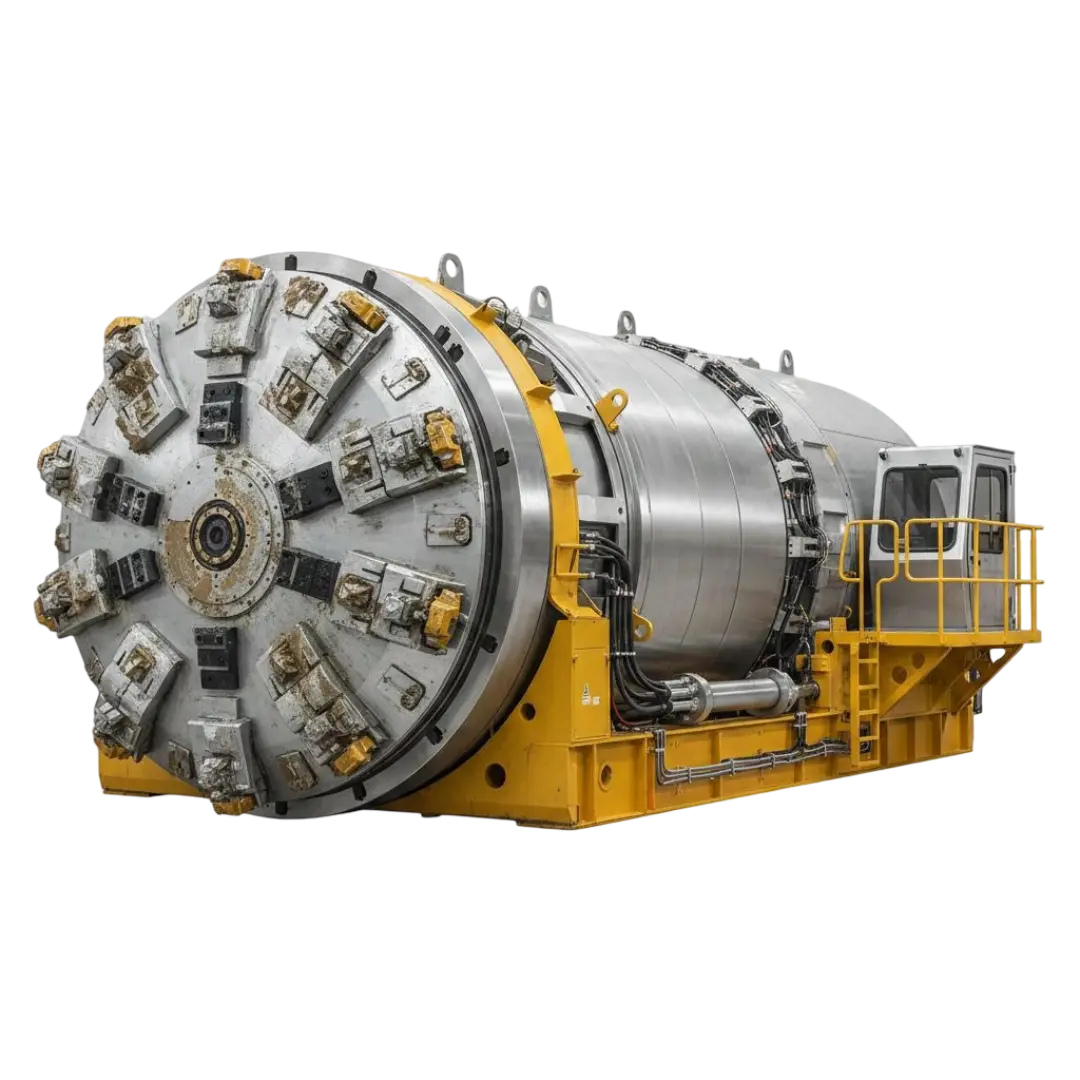
How does a tunnel boring machine work?
- Excavation: cutterhead tools break or loosen material at the tunnel face.
- Advance: the propulsion system moves the machine forward; the reaction arrangement depends on its design.
- Spoil removal: excavated material leaves through equipment such as a screw conveyor, belt conveyor or slurry circuit.
- Ground support: many shield machines install precast lining segments. Other designs use different support arrangements.
These operations have to stay coordinated. A restriction in spoil handling can limit advance even when the cutterhead drive is available. Monitoring one motor alone will not explain the condition of the complete installation.
Types of tunnel boring machines: hard rock, EPB and slurry
Hard-rock TBMs use cutting tools suited to rock excavation. Open gripper and shielded machines have different support and propulsion arrangements. Rock strength alone does not settle the choice; fracturing, water and access also matter.
An earth pressure balance (EPB) shield uses excavated material in the chamber to support the face. A slurry shield uses a pressurised slurry circuit and surface separation equipment. The supporting medium and spoil-removal equipment differ, so their maintenance requirements differ too.
Multi-mode machines can be configured for more than one operating mode. That flexibility is project-specific. It does not mean every TBM can change freely between rock, EPB and slurry operation.
Where TBMs fit in Indian projects
Metro tunnels, rail links, hydropower works and underground water infrastructure can use mechanised tunnelling where the alignment and ground investigation support it. Surface disruption may be reduced along the drive, but launch and reception works, logistics and spoil handling still need space.
Plan maintenance around the installed system
Record changes in cutterhead torque, lubrication performance, hydraulic condition, alarms and spoil-removal behaviour. A trend gives the project and OEM team more to work with than a single alarm screenshot. Cutter wear, main-bearing condition and control faults need different investigations.
Separate accessible surface equipment from machine interventions. Work at a pressurised face, underground access and internal drive repairs require the project method, specialist resources and OEM involvement. A general mechanic visit cannot cover every TBM fault.
TBM and microtunnelling are related, but different scopes
Microtunnelling commonly uses a remotely controlled MTBM with pipe jacking for pipeline installation. It should not be treated as interchangeable with every large tunnel drive. Our microtunnelling equipment guide covers subsystem identification and service planning for that equipment family.
Questions from project teams
Does every TBM install concrete lining segments?
No. Many shield TBMs install segments, while other machine designs use different support methods. Confirm the support arrangement from the project design and machine documentation.
Can a slurry pump fault stop tunnelling?
It can limit or interrupt excavation when the slurry circuit cannot remove spoil as required. The team must distinguish pump condition from pipeline restrictions, separation performance and process changes.
Send a service brief that identifies the equipment
For accessible pumps, power packs or related support equipment, contact Mech On Site with the assembly make, model, location and fault history. Identify project and OEM responsibilities before arranging specialist machine work.